> For the complete documentation index, see [llms.txt](https://help.depence.com/llms.txt). Markdown versions of documentation pages are available by appending `.md` to page URLs; this page is available as [Markdown](https://help.depence.com/depence-rendering/depence-image-rendering/long-exposure-rendering.md).
# Long Exposure Rendering
Especially for scenes with particle effects like fountains or firework this feature can create stunning renders with motion blur. It simply simulates the shutter time of a camera to create long-exposure images. To keep things simple, you don't have to worry about intensities and exposure settings here. The renderer will handle this automatically.
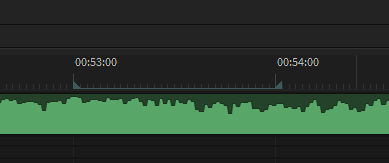
To create a Long-Exposure render, you need to have a show file loaded and a loop-region defined. These regions can be as long in time as needed, but shouln't be too long, because each frame inside that region will be rendered. To get best results, try to set the option between 1 and 5 sec..
Defined lopp-region
### Exposure Curve
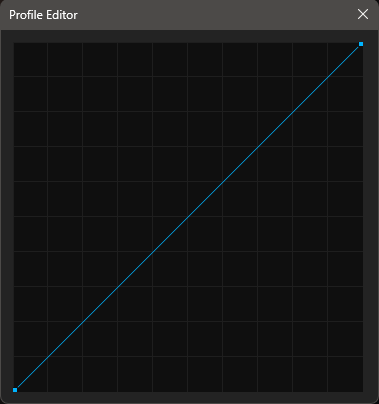
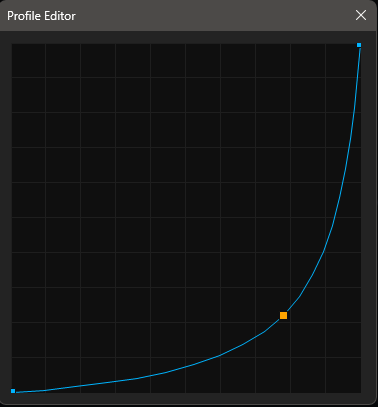
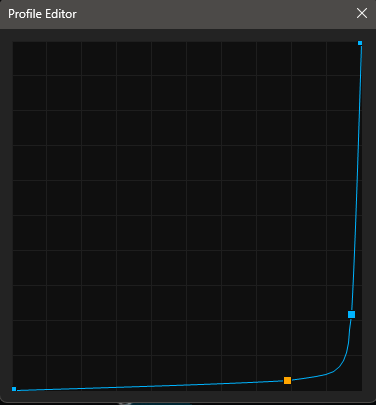
In real life, the accumulation of light on a film does not happen linear. Using the exposure curve you can define how samples should be accumulated to create different looks. The final result depends on the overall exposure time (defined with the loop region in the timeline) and the exposure curve.
To make artistically changes easier, the overall internsity of the image will be weights automatically, even in very long exposure times.
#### Example 1
#### Example 2
#### Example 3
---
# Agent Instructions
This documentation is published with GitBook. GitBook is the documentation platform designed so that both humans and AI agents can read, navigate, and reason over technical content effectively. Learn more at gitbook.com.
## Querying This Documentation
If you need additional information that is not directly available in this page, you can query the documentation by asking a question.
Perform an HTTP GET request on the following URL with the `ask` and `goal` query parameters:
```
GET https://help.depence.com/depence-rendering/depence-image-rendering/long-exposure-rendering.md?ask=&goal=
```
`ask` is the immediate question: it should be specific, self-contained, and written in natural language.
`goal` is what the user is ultimately trying to achieve, the reason they need the answer. Sharing it helps GitBook give you a better, more relevant answer. A goal is most helpful when it describes the outcome the user wants rather than restating the question. For example, with `ask=how do I create an API token`, a goal like `automate deployments from our CI pipeline` lets GitBook tailor the answer to that use case.
The response will contain a direct answer to the question and relevant excerpts and sources from the documentation.
Use this mechanism when the answer is not explicitly present in the current page, you need clarification or additional context, or you want to retrieve related documentation sections.